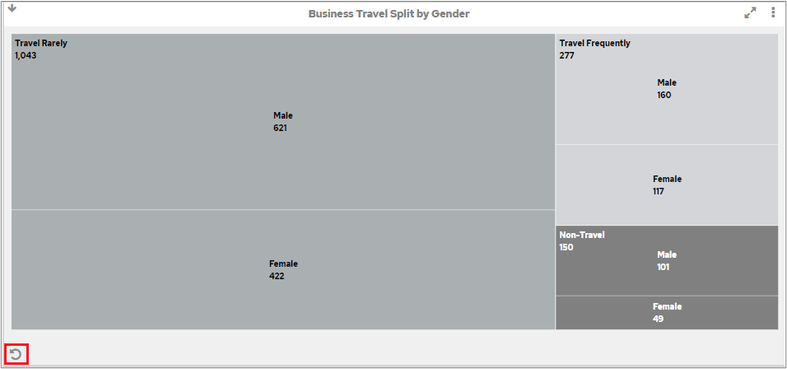
Once clicked, the button becomes a toggle allowing you to return to the chart.

Chart category
This drop-down list allows you to change the parent category that this chart belongs to, which may have an effect on security: if a user does not have access to the category you have placed the chart in, they will be unable to see it. However, all charts can be assigned to the category ‘Home’, which means they can be accessed by all users. To change or assign a category, click the drop-down arrow.
Chart links
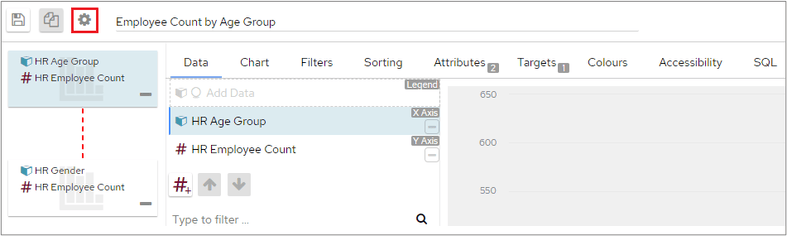
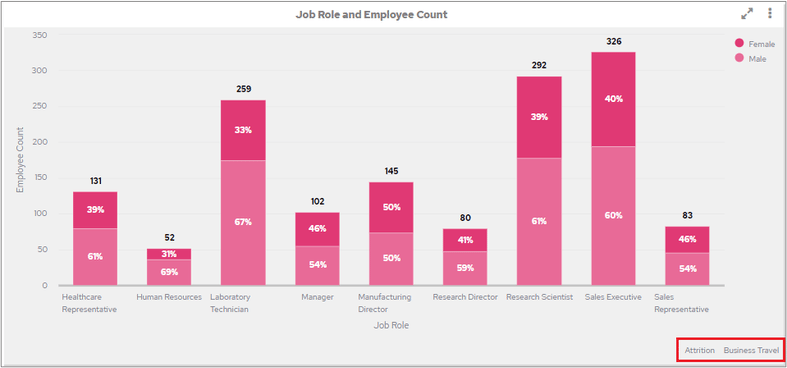
This option allows you to add link buttons to a chart so users can navigate to other charts/tables based on the button they click. To use link buttons, you will need to create the chart(s) that you want to link to. This can either mean creating the chart from scratch or linking to an existing one in the library. If you need to create a new chart, see Creating Charts for full details. To create the link buttons, click the Edit chart icon in the Chart tools menu. Click the Config button at the top-left of the Edit chart screen. In the Config screen, click the Add icon in the Chart Links section. In the Label field, type the text that you want to appear as the link. The text should give some information to a user about what they might see by clicking the link. In the next field, click the drop-down arrow. This will display the Chart Library from where you can select the chart that you want to link to.
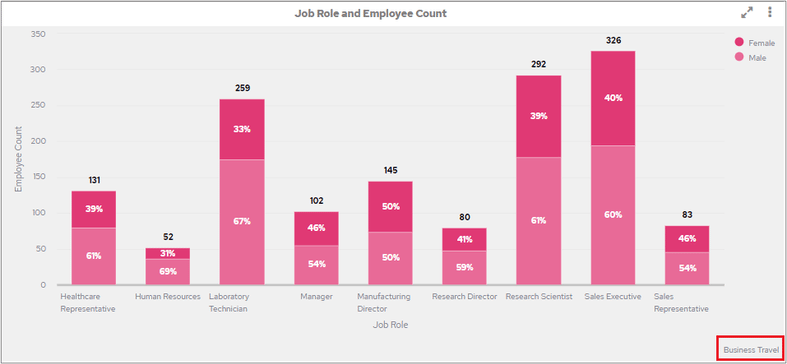
Remember that you may need to create link buttons on every connected chart, so users can navigate to all the connected charts from whichever chart they are currently viewing.
Sorting the Link Buttons
By default, the Link Buttons will appear in the order they were added in the Chart Configuration screen. If preferred, you can sort them into alphabetical order by clicking the sort button at the top-right of the Chart Links section.
Removing Link Buttons
To remove link buttons, click the Edit chart icon in the Chart tools menu in the chart cell that you created the link buttons in. Click the Config icon at the top of the Edit chart screen and click the remove icon next to the link that you want to remove.
Chart Links Position
By default, link buttons are positioned at the bottom right of a cell. Similar to Legend Positions, this section allows you to decide where the chart link buttons are positioned in a chart cell.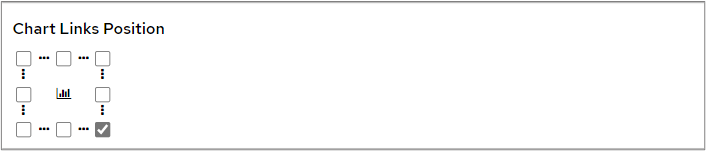
- Top Left
- Top Right
- Middle Left
- Middle Right
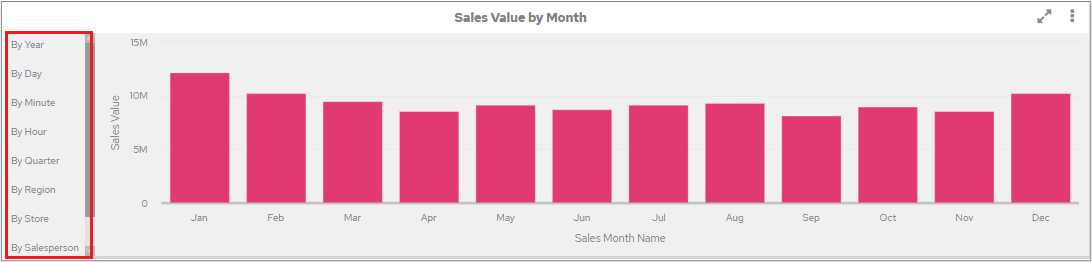
Chart password
This section allows you to restrict the chart with a password. A text box will appear under the radio buttons that will ask you to create and confirm your password when a protected state is selected. No password – users will be able to open and edit a chart by clicking the Edit Chart icon. Protect write – users will need to specify a password to open the Edit Chart screen and make changes to the chart. If they don’t know the password, they can click Open read-only. In the Edit Chart screen, all edit options will still be visible and users can click on and change any of them, but they will be unable to click the Save icon to confirm the changes.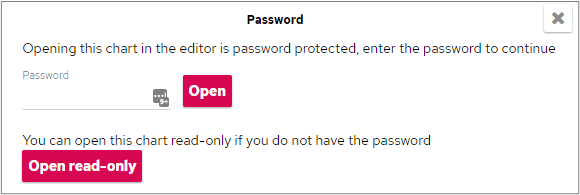
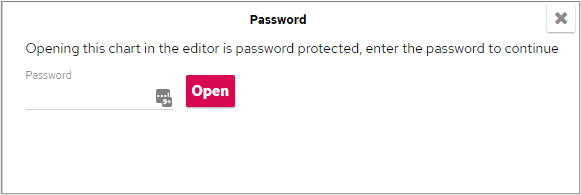
Chart properties
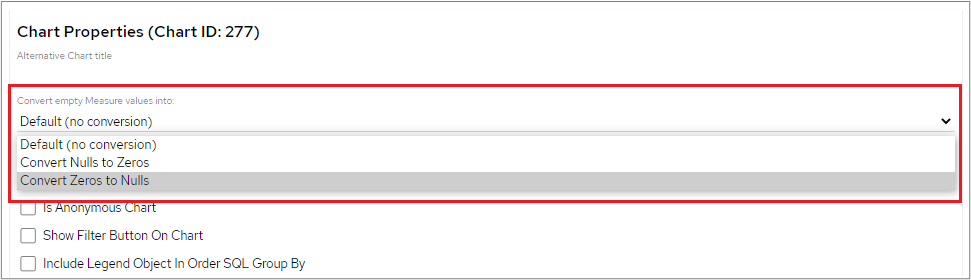
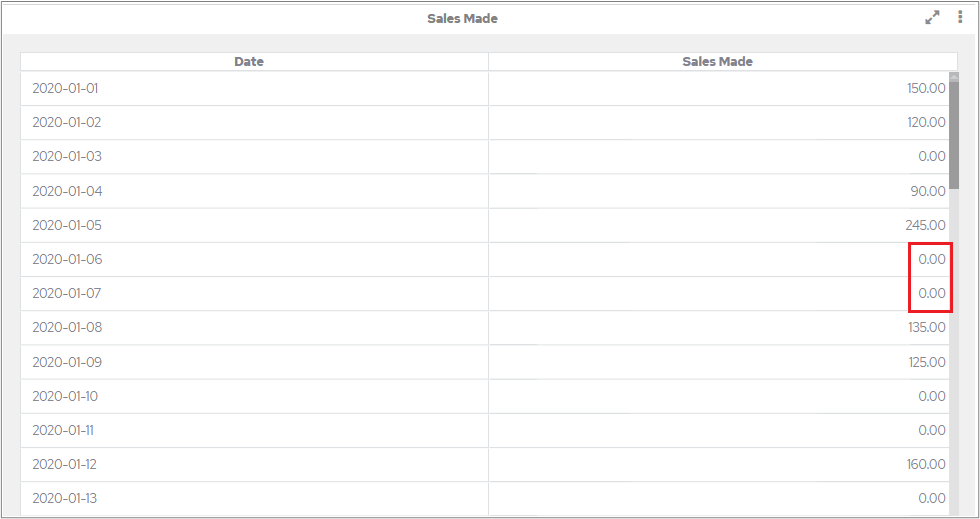
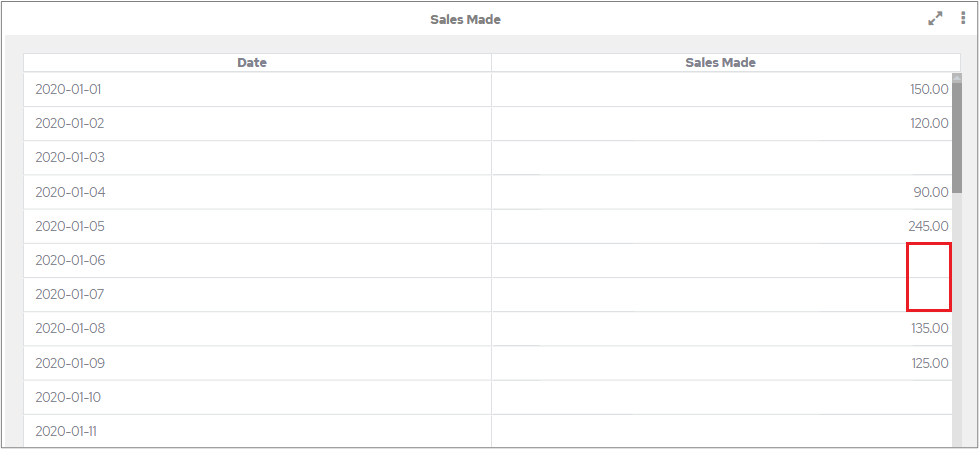
Convert empty Measure values into Nulls or Zeros
The Convert empty measure values into field can be used to select how empty data should be displayed on a chart.
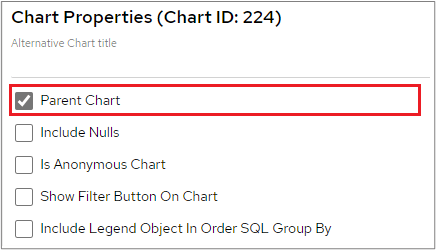
Parent Chart
This checkbox will set the current chart as a parent; this means that all other charts on the category will be filtered by the value that is selected on this chart.If you make a chart a Parent Chart, then any drilldowns on the chosen chart will no longer work. This is because selecting a segment of data will also filter the other charts on the same category.

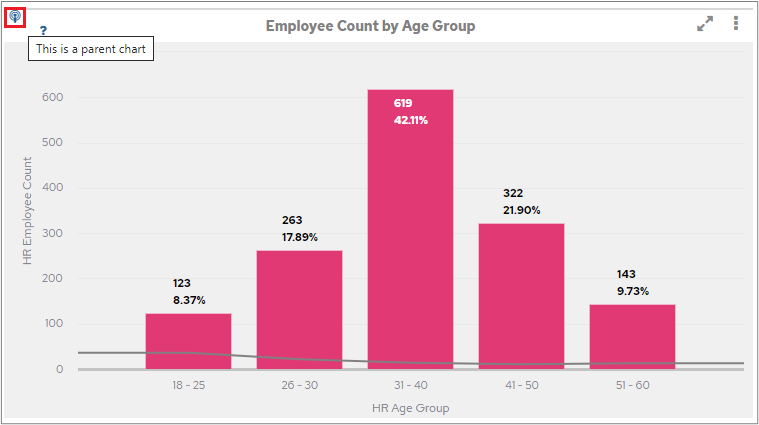

This option will not be available for Analytic chart types.
Include Nulls
This checkbox will include NULL values when filtering. For example, if you’re filtering on Department = “Sales”, then with this checkbox ticked, you will be filtering on Department = Sales or Department is null.Is Anonymous Chart
This checkbox allows you to view the chart without needing to log into the dashboard, for example to embed it into a website or intranet. The ability to do this is controlled by the end user’s licence.Show Filter Button On Chart
This checkbox will show the Temporary filter button on the chart.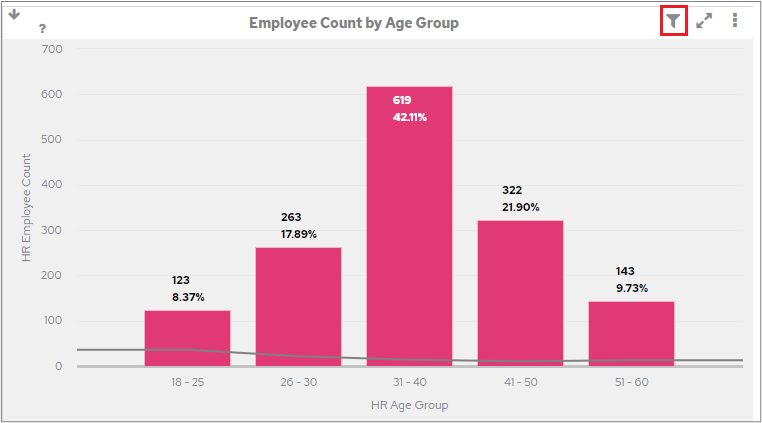
Include Legend Object in Order SQL Group By
This checkbox will put the Legend Object within the Group By section of the SQL generated by the chart.Exclude Chart From Cache
This checkbox will exclude the chart from the cache, meaning that data for the chart will always be reloaded from the database. This ensures that your chart data is always up to date when the chart is displayed but will have an adverse effect on performance.PDF settings
This enables you to choose whether PDFs rendered from this chart are formatted in Portrait or Landscape mode.Export as Excel without format
This will remove any dashboard formatting applied to objects, for example prefix, suffix, decimal places, and thousand separators, from Excel files produced by the dashboard. Formatting applied to the chart, such as colour options as shown below, will not be removed. Example with this option unticked

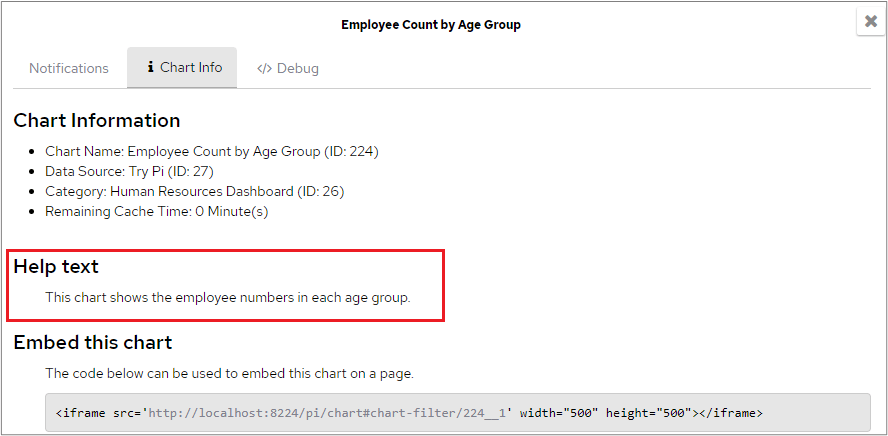
Help text
Whatever you place in the Help Text field: