Title
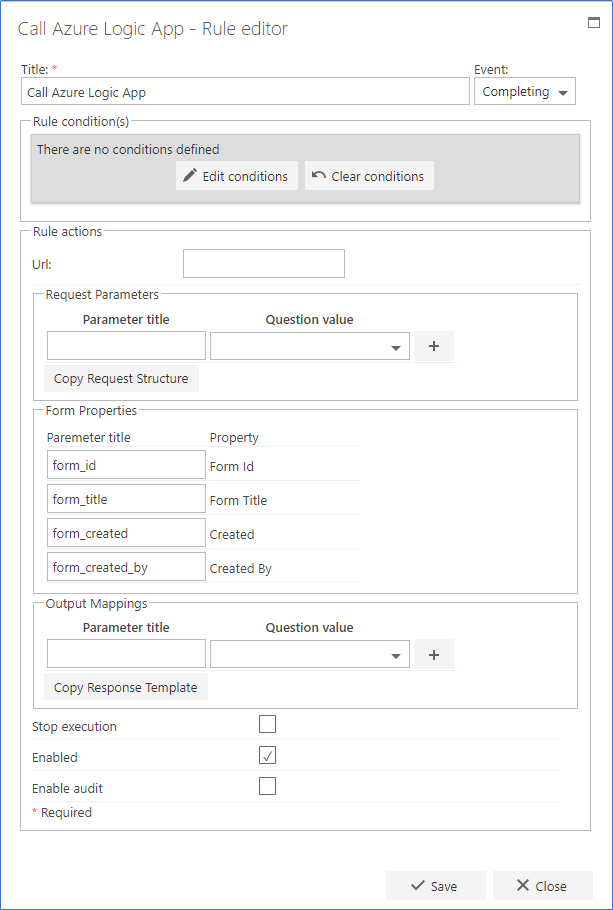
The first part of the business rule lets you define a title for your rule and select the event on which it operates. The default title is the standard FlowForma rule name; change it by deleting the text and entering your own. In the event field you determine when the rule is executed. For a flow this can occur when the form is loaded, started, or completed. For a step this can occur when the step is started, saved, or completed. For questions it can occur when the question is updated.Rule condition(s)
The second part of the business rule lets you set conditions. These are not required, but if entered they control when the rule is executed in relation to other items in the form.Rule actions
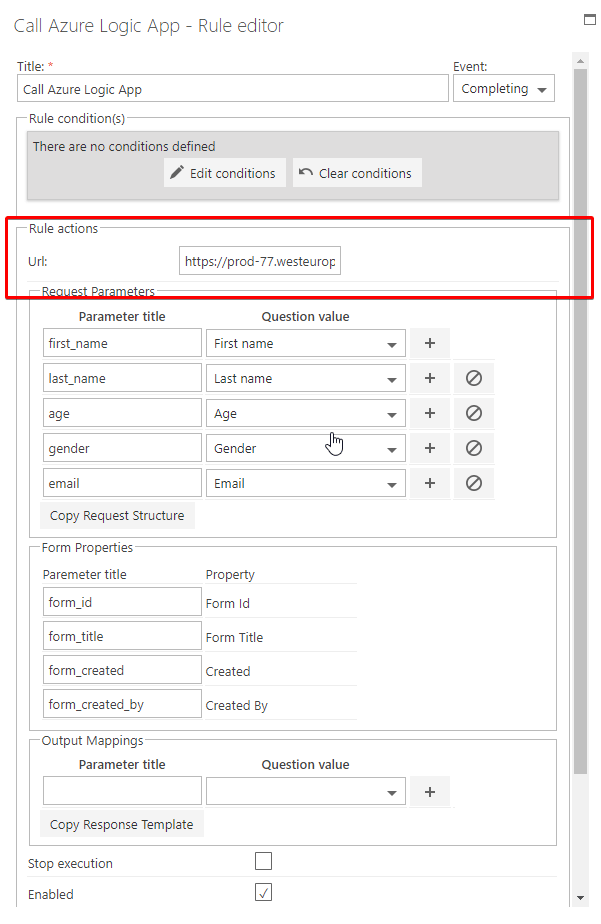
Url: This is the Url of the Azure Logic App that is called by the business rule. Copy it from the Logic App. Request parameters: To export data from a FlowForma form to a Logic App, map the FlowForma form questions to Logic App properties. Create these properties and mappings here, then use the button provided to copy the properties so you can paste them into the Logic App. Form properties: Standard properties for each form are passed to the Logic App: the FlowForma form Form Id, Form title, the date the form was created, and the user who created the form. These are exported to the Logic App automatically when the rule executes. Output mappings: When the Logic App executes, you can receive data back from it into the FlowForma form. To do this, create mappings between the FlowForma form question and the Logic App property. Create these properties and mappings here, then use the button provided to copy the properties so you can paste them into the Logic App. Stop execution: If enabled, no other rules run after this rule executes. Enabled: As rules are not saved to a list like questions and steps are, toggle this option to enable or disable a rule without having to delete it. Enable audit: If checked, a record will be added to the audit trail when this rule is executed. This option is available when the Compliance feature pack is activated. Transferring data using FlowForma Connect requires updating a FlowForma flow and an Azure Logic App at the same time. Below are the steps required to create the business rule in the FlowForma flow and create the Logic App.Step 1. Create business rule in the FlowForma form
Once you have created the questions that will be used to send data to the Logic App or receive data from the Logic App, add a Call Azure Logic App business rule.Step 2. Create the Logic App
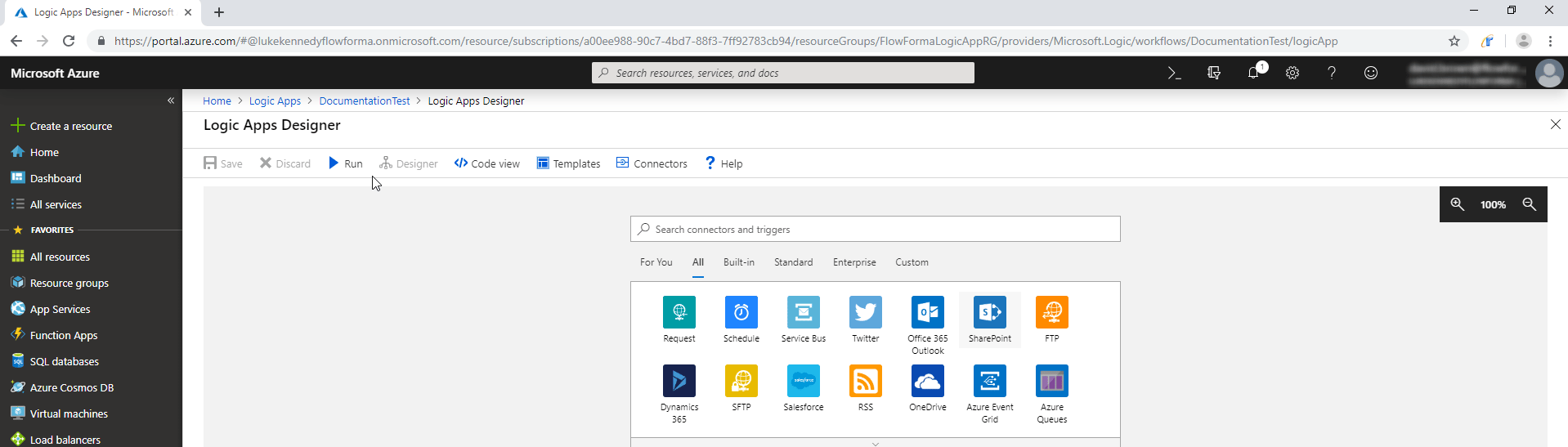
Go to Logic apps in the Azure portal The following screen will be displayed.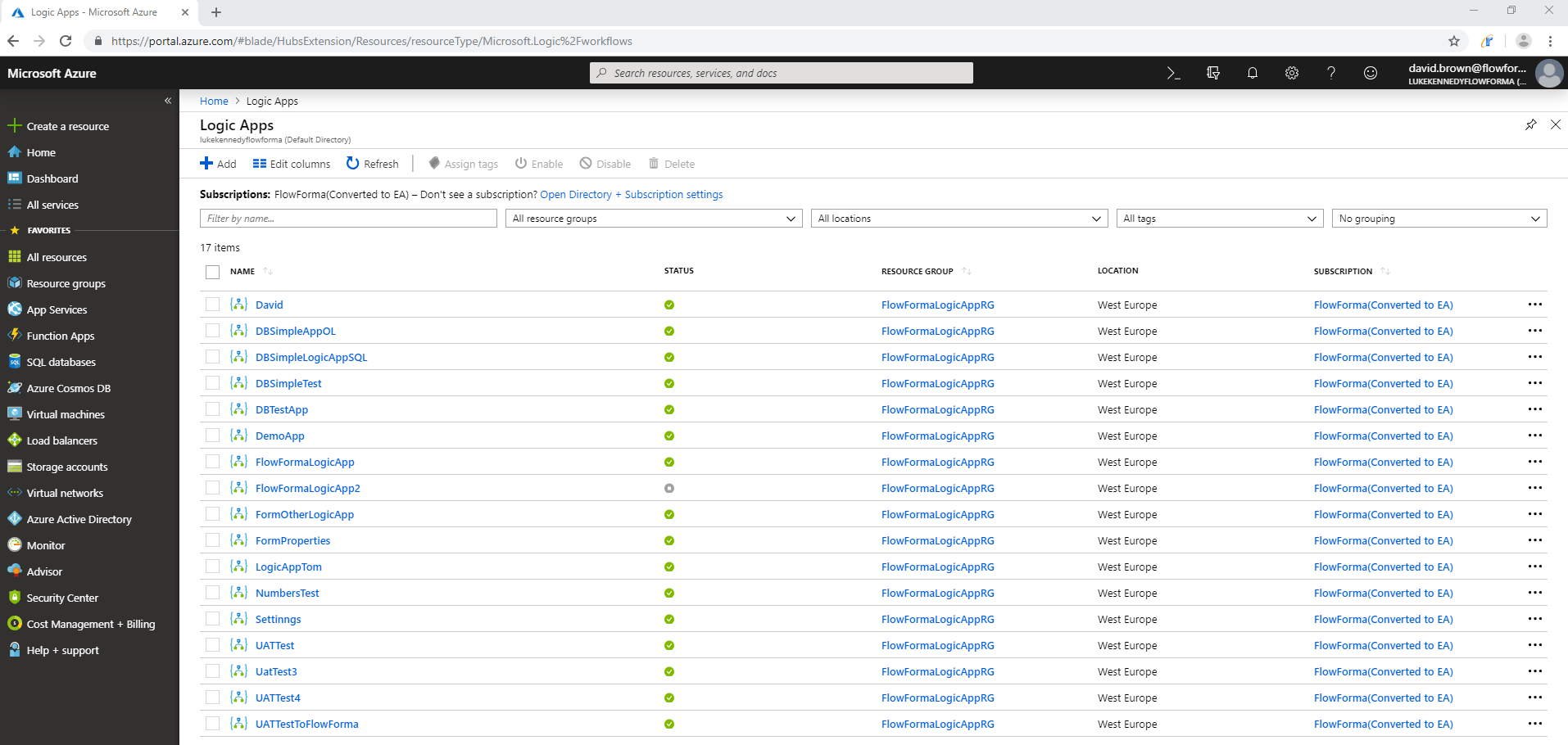
 to create a new Logic App. The screen below is displayed.
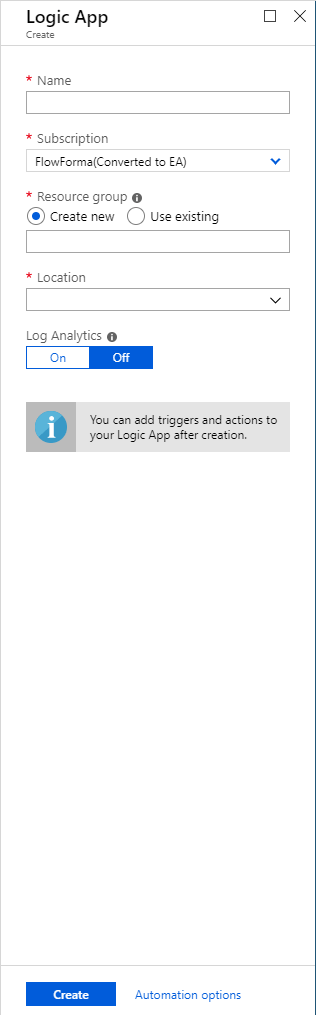
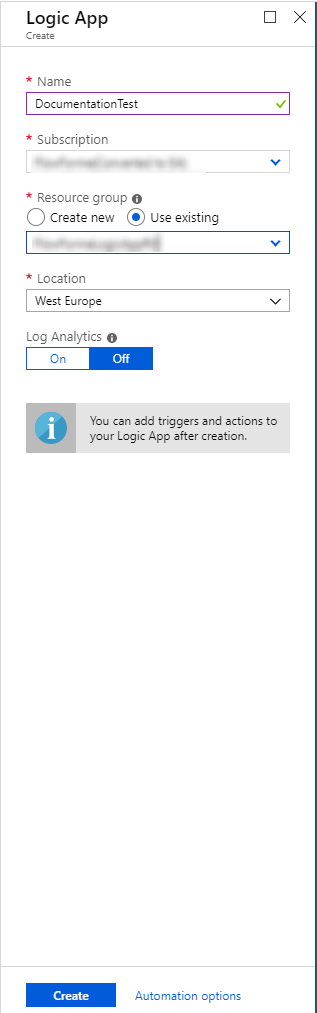
 You now need to select which type of Logic App you want to create.
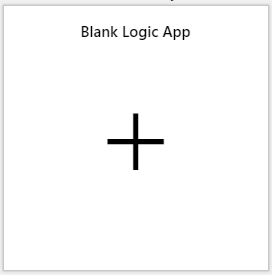
Select Blank Logic App.
You now need to select which type of Logic App you want to create.
Select Blank Logic App.
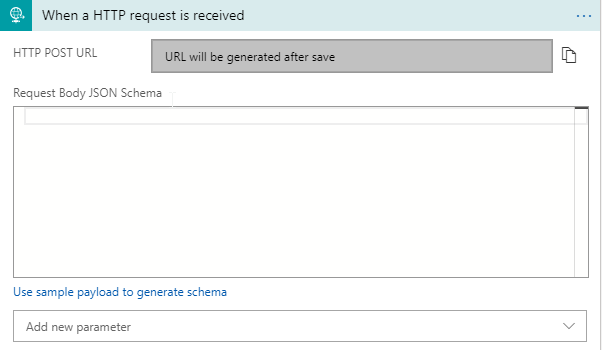
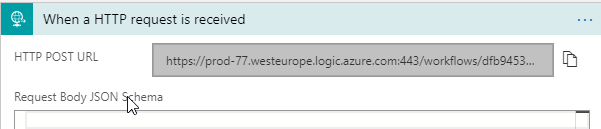
 The Logic App has now been saved, and a Url for the Logic App generated. Click the
  symbol next to the HTTP Post URL to copy the Url.
Step 3. Create request parameters (Questions used to send data to the Logic App)
In the request parameters section, open the Question value dropdown and you will see all the questions contained in the FlowForma flow. Select the question you require, and a parameter title is created using this question name.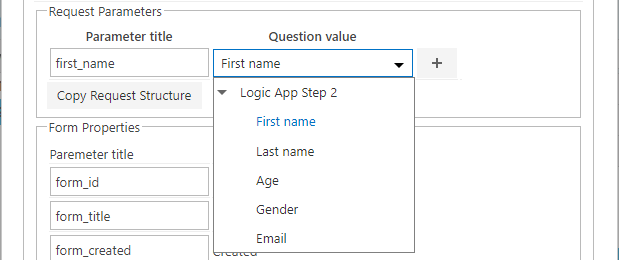
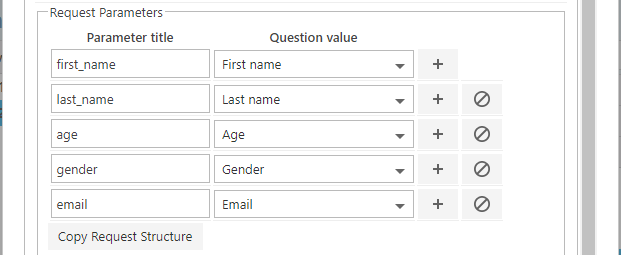
 , which copies the request structure to your clipboard so you can paste it into the Logic App using Ctrl+V.
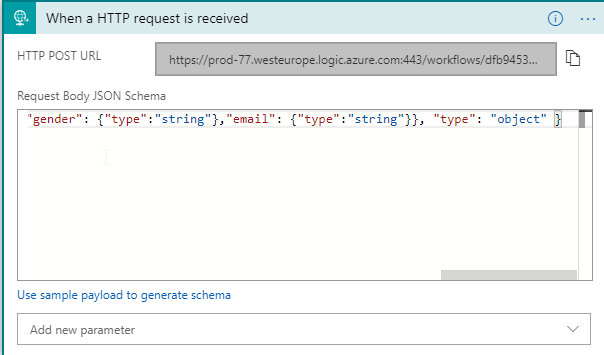
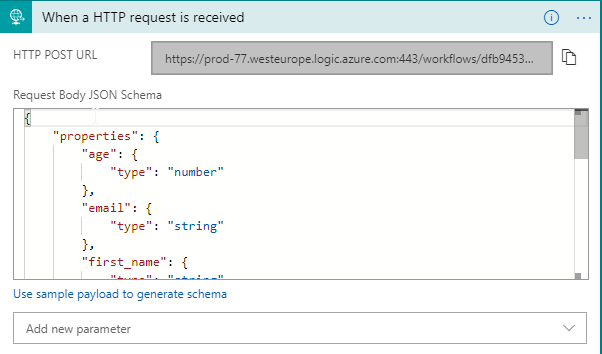
Click the button and return to your Logic App, paste it into the Request body JSON Schema field, and press Ctrl+Y.
, which copies the request structure to your clipboard so you can paste it into the Logic App using Ctrl+V.
Click the button and return to your Logic App, paste it into the Request body JSON Schema field, and press Ctrl+Y.
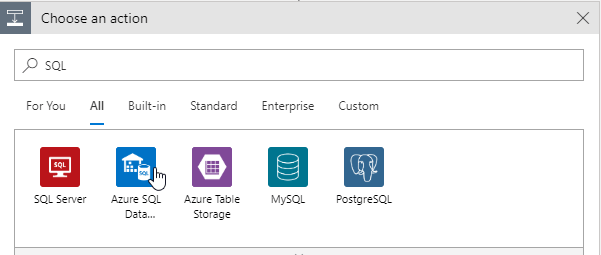
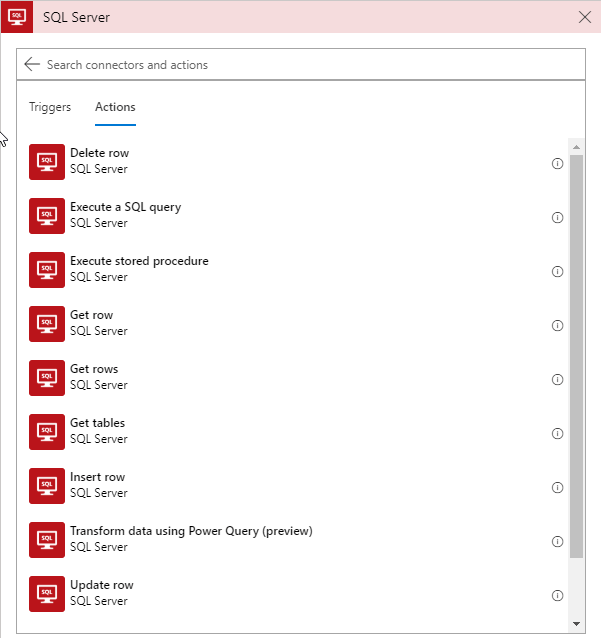
 Search for the action you require, in this case SQL server.
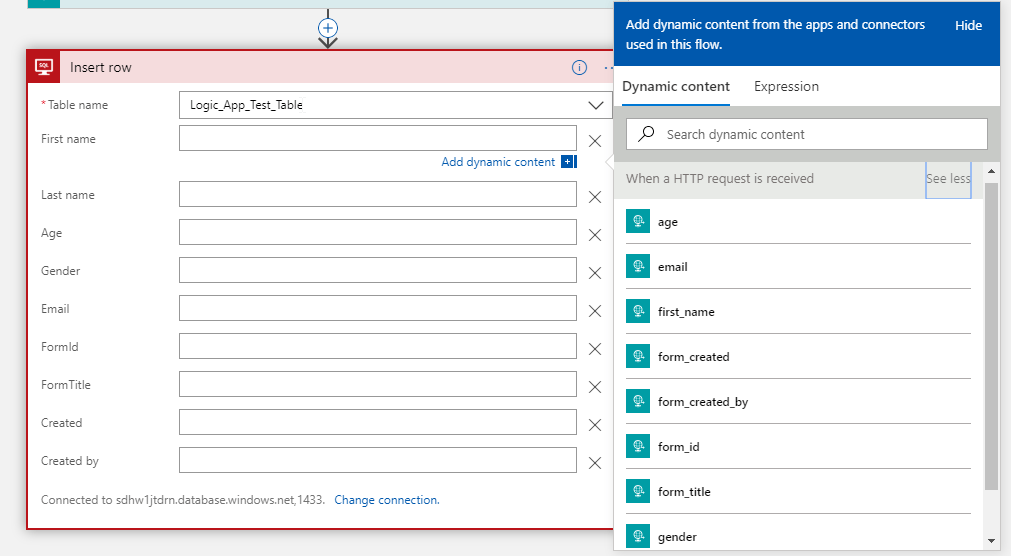
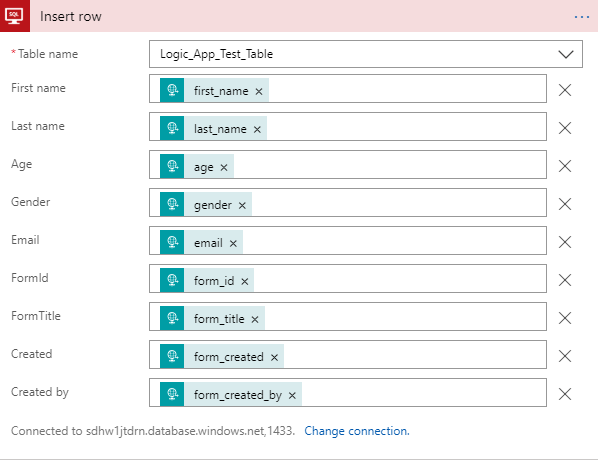
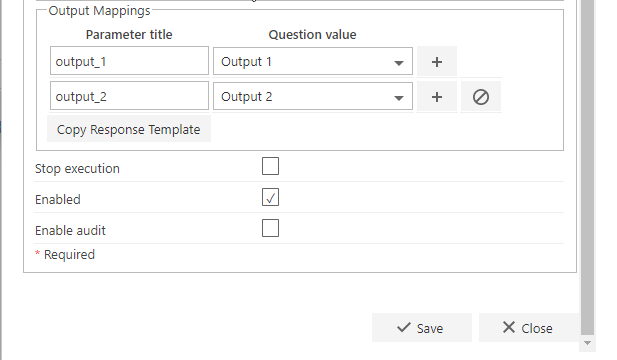
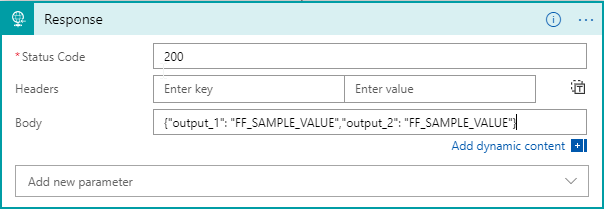
 button to add the response structure to your clipboard.
Go back to your Logic App and click
button to add the response structure to your clipboard.
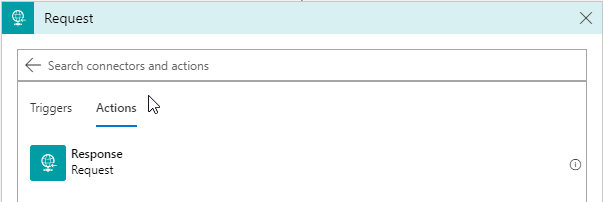
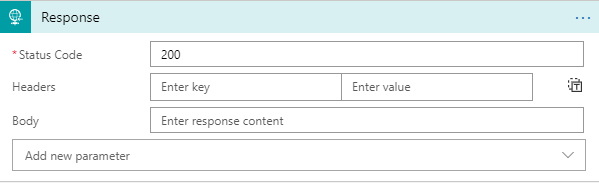
Go back to your Logic App and click  Select the action you require, in this case HTTP response.